All writing is transcription
Why the boring bits of writing protect us from the ravages of AI

Who was it who said ‘all writing is rewriting’?
A quick google suggests it was Salman Rushdie. I’ve been thinking about this quote quite a lot recently, and I think I would personally tweak it to say: all writing is transcription.
The reason for this is that after a period of one year of barely reading or writing, I am finally back to my creative practice. A few different things have helped to shift the dial here.
The first is that I’m not currently job hunting; I find that looking for work makes me feel guilty about enjoying any kind of fun or creativity at all, and any energy for writing goes to cover letters and application forms.
The second is that I’ve been taking some workshops, learning and being encouraged by other writers of different genres and approaches.
The third and perhaps the most important thing that has changed, is that in one of my roles I now have a new colleague and am having to juggle a bit less, and this has opened up brainspace for writing!
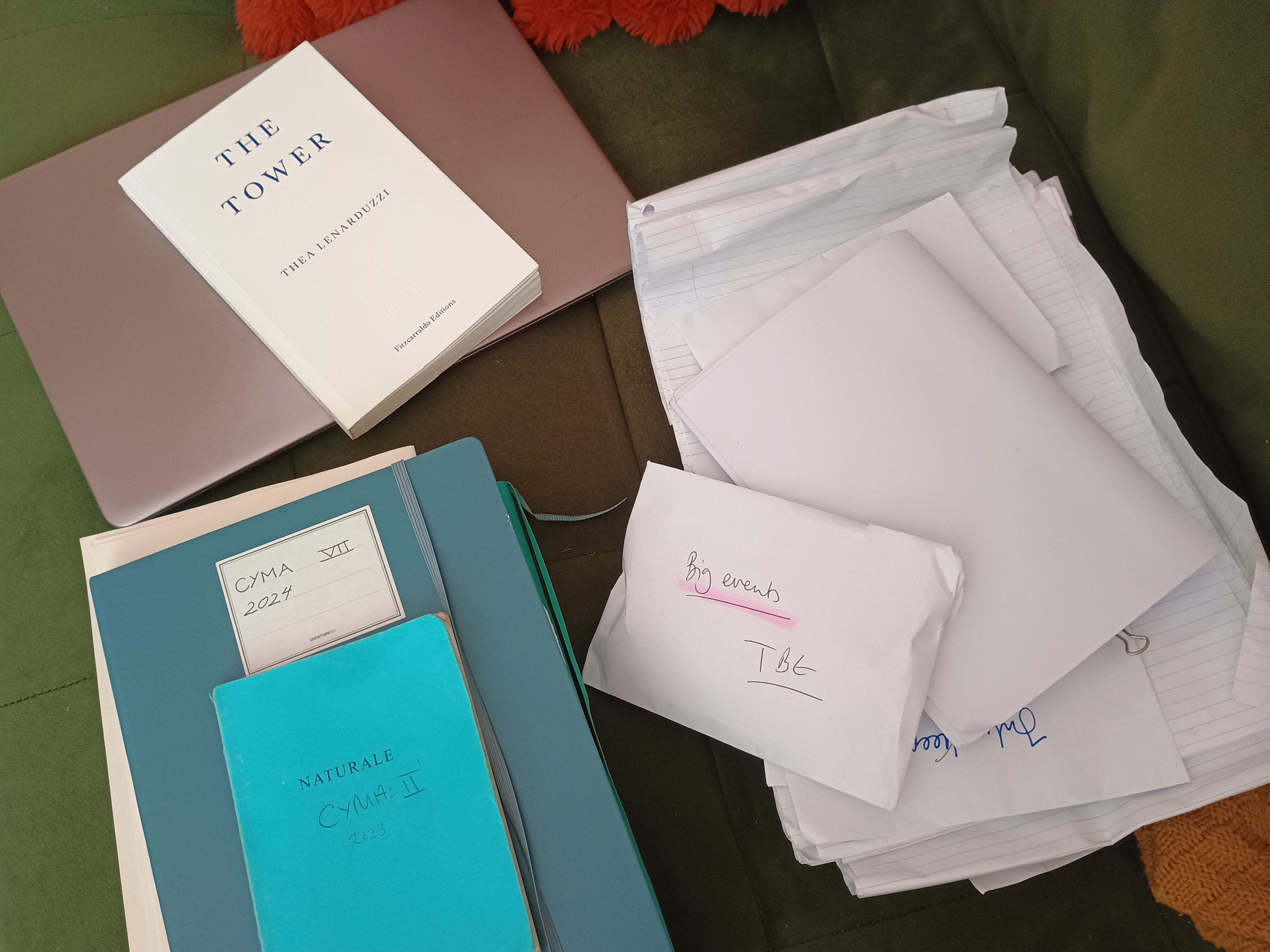
Returning to my creative practice, I’ve been looking through my notebooks, drafts and scraps from my two large projects that are partially complete. I realised that I have a lot of transcription to do, lots of rough notes that need to be typed up, and which will form the basis of a book (pending more redrafting, editing, etc. of course).
The great writer and his secretary
Transcription is such an important step in my process. In some ways it’s the first edit, as I improve things along the way as I type. But it’s also an early generative stage of just getting words on the page, where I can then work on them further. Transcription itself takes a very long time and is highly detailed work. Flicking my gaze from the page to the screen hurts my neck after a while, and overall it can be quite a boring job.
I think it was Roald Dahl who used to write in a special writing shed every morning, and then as he took his lunch his secretary would type up his drafts. He could then spend the afternoon redrafting and editing what he’d written that morning. The absolute luxury of this arrangement, of having a separate paid human to do the transcription for you, makes me rather rueful. If I can’t bear any more typing, I must rely on cheaper, less accurate speech to text technology. Still, when dictating, it is my own time and attention that have to be spent on the transcription.
Obviously, I am in favour of there now being more fulfilling roles for women than simply typing up the great man’s morning emissions. But I have to confess that there is a part of me who is rather envious at the idea of this kind of secretarial support for one’s creative practice.

The ethics of transcription
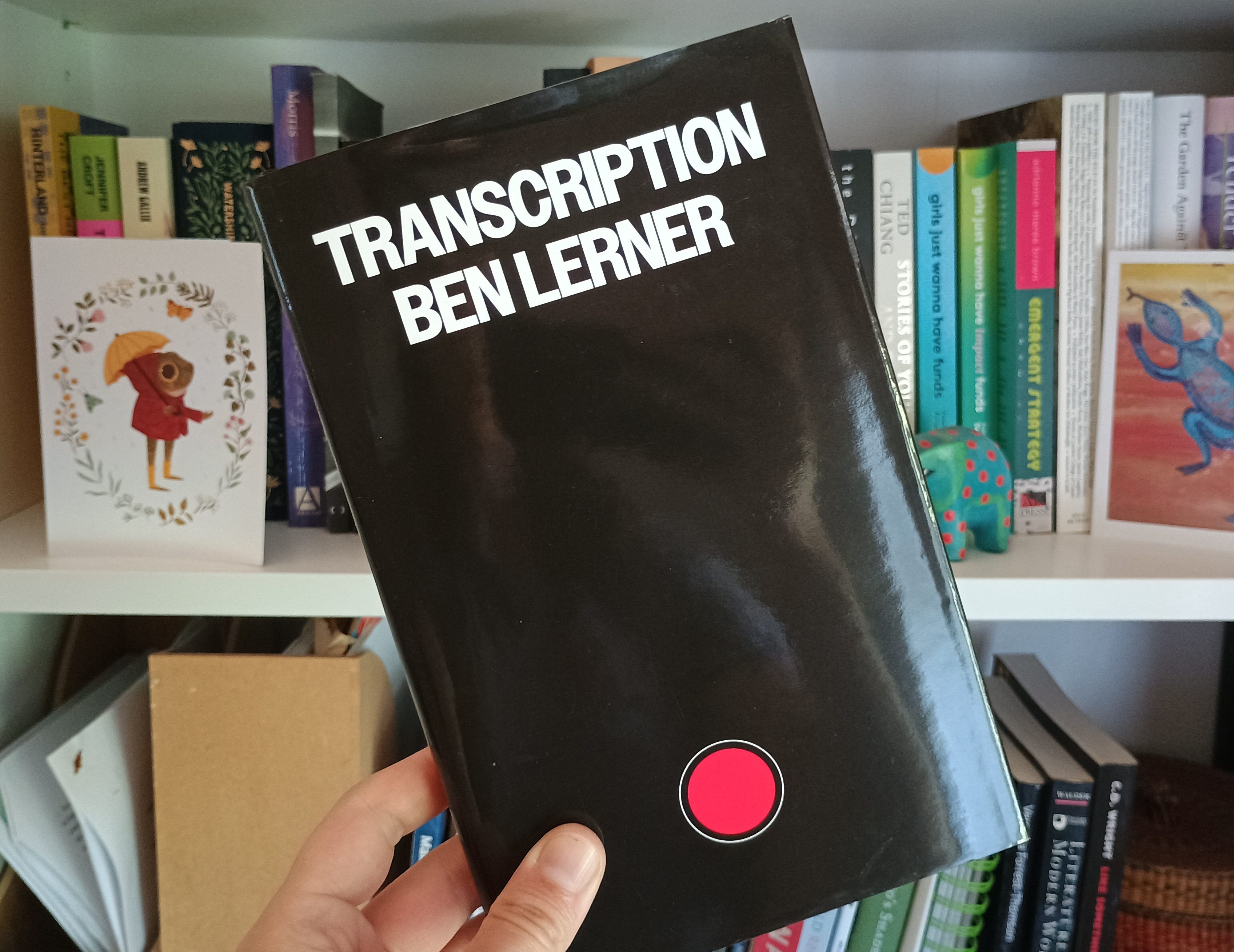
So transcription is physically/economically pricey... I recently read Ben Lerner’s latest novel, Transcription, in which it is also ethically and interpersonally difficult. The narrator visits an elderly writer friend to conduct a last interview, but the supposed transcription is actually more of a reconstruction -- cue cringemaking interpersonal repercussions. But there’s also ethical questions about attribution, authorship, and authority -- questions which become even more pressing given the technology we have today, such as AI deep fakes and the like.
Reading the book with my current personal lens, my sense is that it is also about the complexities of transcription itself. That the perfect transcription cannot exist. A conversation between friends is too complex, with the layers of their dynamic and shared history, to be fully committed to the page. In craft terms, and with an eye on my own project, how can a transcription, the most basic transliteration of human experience, show the qualities and journey of inquiry or conversation through time?
Lerner’s artistic explorations in this area are without doubt more intellectual then my process issues around the act of typing up or re-dictating my notes. But it does at least offer a welcome tonic to that rather galling picture of the great writer and his secretary.
Transcription against AI
I have to accept that my projects are not going to progress without me spending a lot of time transcribing my path through my subject matter so far. Writing takes a lot of time. It is a slow art form.
This is one reason why I’m not too worried about AI. I’m not saying that AI companies training their models on writers’ work without compensation, or the difficulties around attribution, or job losses in various industries, are not pressing concerns that require action. But I am saying that the livelihoods of writers are already pretty broken. Let’s not romanticise where we are right now: writing as an artform is already undervalued, underfunded and underpaid. AI is the latest iteration of this phenomenon, rather than the root cause.
And the thing that AI cannot do is to engage with a piece of writing over a long period of time. I confess to having used AI to summarise documents, create templates, and help me redraft tricky emails (I repent). I have never and will never use it in my creative work, because that defeats the point entirely. If you’re AI agnostic like me, then you will have noticed how the publicly-available models cannot cope with a long text or long periods of analysis. You can begin a so-called chat, and after a certain amount of back and forth the AI forgets things, makes obvious errors and contradictions, and any efficiency or improvement it was providing becomes suddenly completely useless.
AI deals only with the instant; it cannot handle longer engagement with a text or conversation. It has no memory, it has no history, it has no context or experience, and therefore its insights can never compete with a person who does have those things. Although our lifetimes are finite, and our time for our creative practice even more so, the fact that our art form is one that relies on a maturation process is what distinguishes it and makes it precious. Every time you pick up a really good book, someone poured hours and years of their life into it, and it will take you days to read it and years of rereading it, hopefully, giving you lifelong joy. Perhaps less time equals worse writing. Or, the more boring hours I spend transcribing, the less my writing is likely to be boring, homogenous AI scrapings. Boredom in the present means less boredom in the long run.
AI may be colonising the instant, but it cannot fully do the same to experience, which is art’s chief value. The long duration of reading, writing, or any other engagement with art, is experience, is what’s valuable. If we can preserve our experience, which is formed through long or repeated attention, then we have something that cannot be corrupted by machines. Not easy with a smart phone in your pocket, I concede, but we already know this. The way to make the work, to live life well, is to put the phone down somewhere, walk away, and make the art.
The contradiction of transcription
So as I transcribe my notes, which are the length of two novels or more (wish me luck), I will envy the great man and his secretary, I will take comfort in Lerner’s problematization of the transcript, and I will be very bored and frustrated by just how long it takes.
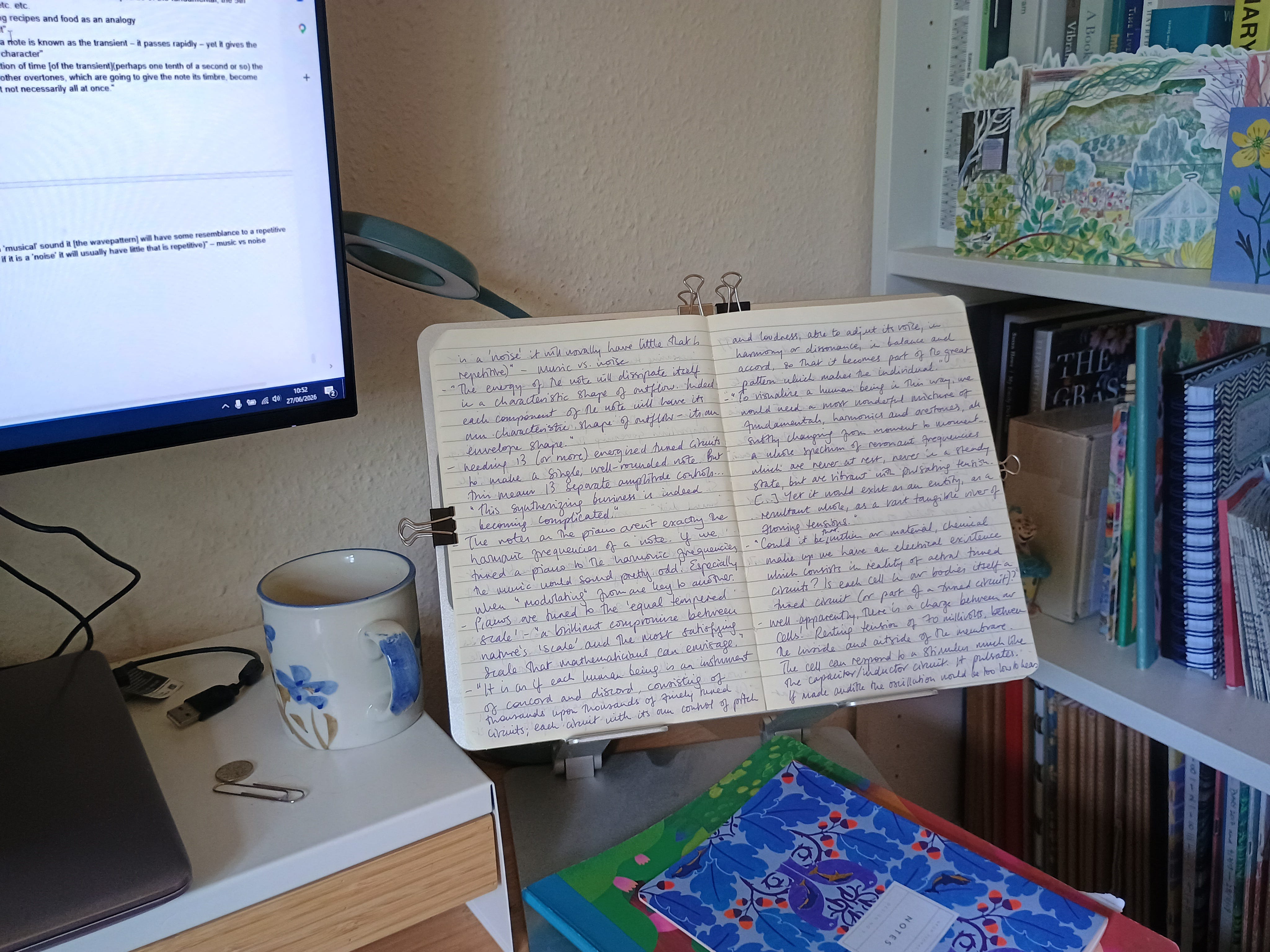
And I will try and remember the power that there is In being my own secretary, in my history and memory and the way these are brought to bear on my writing, and the idea that all writing is transcription — from a notebook, from life, from memory, from imagination. And I will try and be more grateful for the hours of my life that I am able to dedicate to the art form that excites me and brings me such joy.
PS: You might have noticed that Read Write Grow has been renamed to tend notes! I am still reading, writing, growing, but ‘tend’ feels like the connecting thread with some of the others things I do, too. I can say more about some of that in the coming months. In the meantime, long live RWG and welcome to tend.