Five systems that rescued my writing
How I turned envy, emails and examples into practical support

I’ve learned a lot from the recent unblocking of my creative practice. To capture my learning, I have started five documents to help me stay on the path. Here’s how they could help you too.
For me, these documents mostly pertain to creative writing, but you could easily adapt them for any other artform or creative discipline.
1) Ego folder
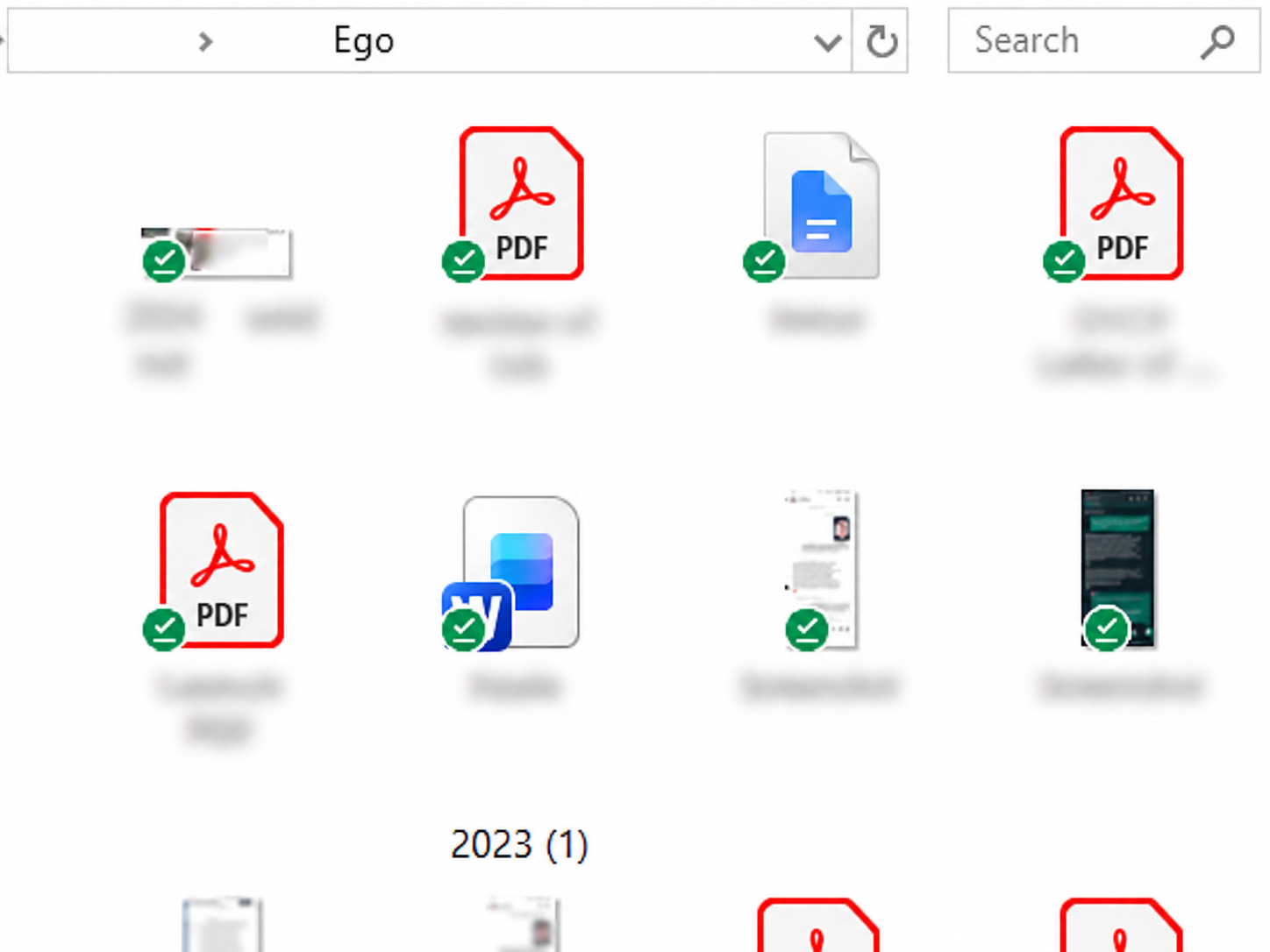
I keep a folder of positive feedback, encouragement, and nice things people have said to me about my writing. When I’ve had a particularly galling rejection or some other setback, I go and look in my Ego Folder.
I’ve been keeping my Ego Folder for about a decade. Even if I add only a couple of things a year, there’s now plenty to make me smile in there, from professional letters of recommendation, to nice messages I’ve received on social media, and plenty of emails from colleagues and friends cheering me on.
And of course, if I ever need to provide testimonials about my work for an application or similar, they’re right there, easy to find.
2) Gleamings master list
From now on, I’m writing down the insights I gain from other writers. This can be from reading their books, attending their workshops, going to their bookshop events, seeing them interviewed, or anything else.
Often these learnings get lost in my notebooks, and I can’t find them again. So from now on, I’m writing them down in my notebooks BUT I will also copy them into my Gleamings master list, so I can find them more quickly next time I need them.
A tippety-top example of a gleaming is from a tutorial with essayist Brian Dillon during an Arvon week a couple of years ago. Brian asked me three totally different questions, which I am still thinking about:
Why are you writing this book?
Why are you writing this book?
Why are you writing this book?
I should note that I always credit where I got the insight from, and I’m adding in links to the original document or a signpost to which notebook I originally wrote it down in. That way I won’t use them without fairly recognising the person who taught me that particular gleaming.
(I call these learnings ‘gleamings’ because I have gleaned them from other, wiser writers. But ‘gleanings’ is too humble a word, given that it means picking up the leftover grain from the ground after a field has been harvested. So I tweaked it to gleamings, which sounds suitably shinier.)
3) Prompts master list
I try and go to a few different masterclasses or workshops a year, usually 2 or 3 over the course of a year. It’s a brilliant way to learn from lots of other writers with different approaches.
It’s all too easy to attend the workshop, watch the webinar, and then… never actually complete or come back to the prompts and exercises, even if they were helpful at the time.
Now, if I come across a prompt that I particularly like, I will add it to my new Prompt master list. In fact, I’ve been going back through my notes from old workshops to add them in, and I’ve been uncovering all sorts of gems from workshops I took a decade ago!
I can then use them to warm up, help me get unstuck, start something new, or look at things from a different perspective.
As for my gleamings, I credit where I got the prompt from, and I add in a link to the document or reference to the notebook I used at the time so I can find more context if I need it.
Generally, I would only use the prompts for my own practice. I wouldn’t share them with other people without permission or without making significant changes to put my own spin on a prompt.
That said, there are some prompts, such as “Write a sentence starting with ‘I remember’” which I’ve seen across workshops with lots of different writers and are pretty standard fare. Those I treat as if they are common knowledge and fair game for my own workshops.
4) Examples of great writing
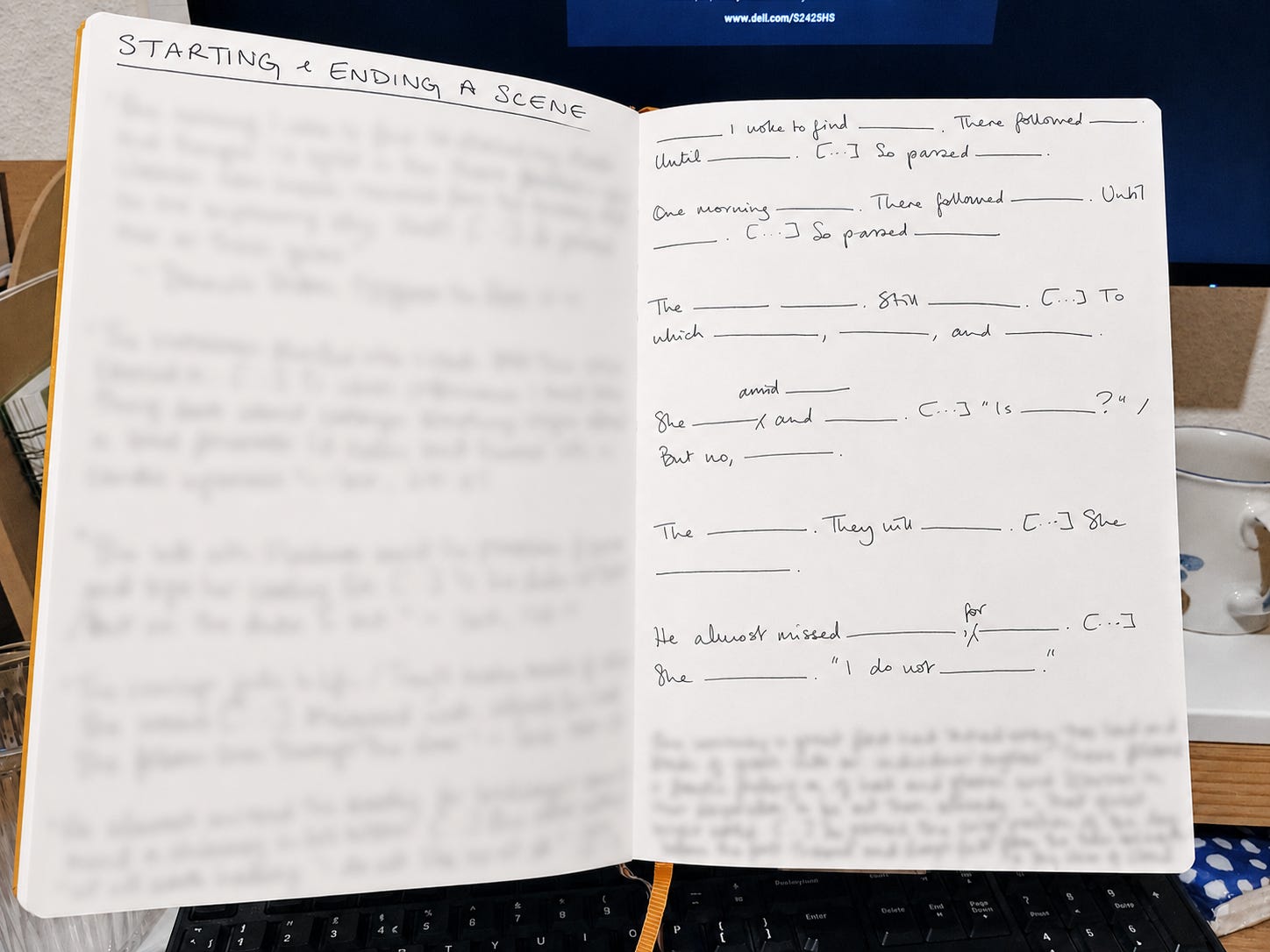
In this document, I am writing down examples of great sentences or even full paragraphs, as well as including a few bullet points analysing why I like them and why they work so well.
I’ve written previously about the power of deliberate practice and how examples of great sentences from other writers can help us to sharpen our own skills. Previously I was doing this in quite a piecemeal way in a hard copy notebook, which is fine – but I now have a centralised repository for all my examples of great writing.
On copying the masters

Many years ago during my visual arts training, my tutors would make us spend hours copying the works of the master artists.
5) The envy→inspo list
I took this idea from Julia Cameron’s The Artist’s Way. In one of the weeks she suggests writing a list of the other creative people you’re envious of. These could be world-famous bestsellers, or it could be your friend who just seems to take to things more effortlessly than you do.
What you do is write down who they are, why you’re envious of them, and then, crucially, what you could learn from them and what action you could take. So if you’re envious of someone who seems to do well in writing contests, something you could do is to enter more contests! I love this exercise because it is so effective and quick at turning envy into inspiration, and negative feelings into positive action.
Some actions I’ve taken based on this exercise include “Make friends with this really cool person instead of being envious of them.” I’m so glad I’ve done that multiple times. Alongside the many other benefits of friendship and having a creative community, when you get to know someone better you realise that you can both learn from and support each other. There may even be things they envy you for in return, who knows!
I can already see how over time these resources have the potential to grow steadily without too much extra work in keeping them live. They’re just for me, there when I need them, and they are supportive and sustaining. And who could say no to a treasure trove of wisdom, and a whole chorus of role models and well wishers?
All of these docs can be kept simply in whatever format or platform you use for your writing. It could be Scrivener, it could be a Google doc, it could be emailing yourself, or something else.
Let me know in the comments if you’ve tried any of these before and how they worked for you!
Wishing you happy writing until next time,
Flo